

Alto Adige: Quiet luxury. Mountain air. Very good wine.
Why Visit?
Alto Adige is one of Italy’s smallest and most meticulous regions—where Alpine discipline meets Italian pleasure. Days move at a quieter pace, vineyards are worked by hand, and meals stretch longer than planned. The scale is intimate: small villages, family-run wineries, and landscapes that invite you to linger rather than rush.
For travelers, Alto Adige delivers balance. You can hike the Dolomites in the morning, swim in an Alpine lake in the afternoon, and sit down to a beautifully simple dinner with exceptional local wine at night. It’s ideal for people who value experiences over checklists—who want great food, thoughtful wine, and nature without crowds.
Culturally, it feels like a gentle departure from the rest of Italy. You’ll hear German and Italian spoken interchangeably, see Tyrolean architecture alongside Italian cafés, and taste a cuisine that blends mountain heartiness with Mediterranean freshness. That dual identity gives the region its quiet confidence.
If you’re drawn to places that feel authentic, unhurried, and deeply rooted, Alto Adige delivers—not loudly, but memorably.
When to Go
Summer (June–September): Ideal for hiking, cycling vineyard roads, winery visits, and swimming in Lago di Caldaro. Long days, terrace dining, crisp whites.
Winter (December–March): A snow-globe version of Europe—skiing, cozy mountain huts, spa afternoons, and Christmas markets in Bolzano and Merano.
Either season works beautifully; it just depends on whether your trip leans outdoorsy or indulgent (ideally both).
Where to Stay
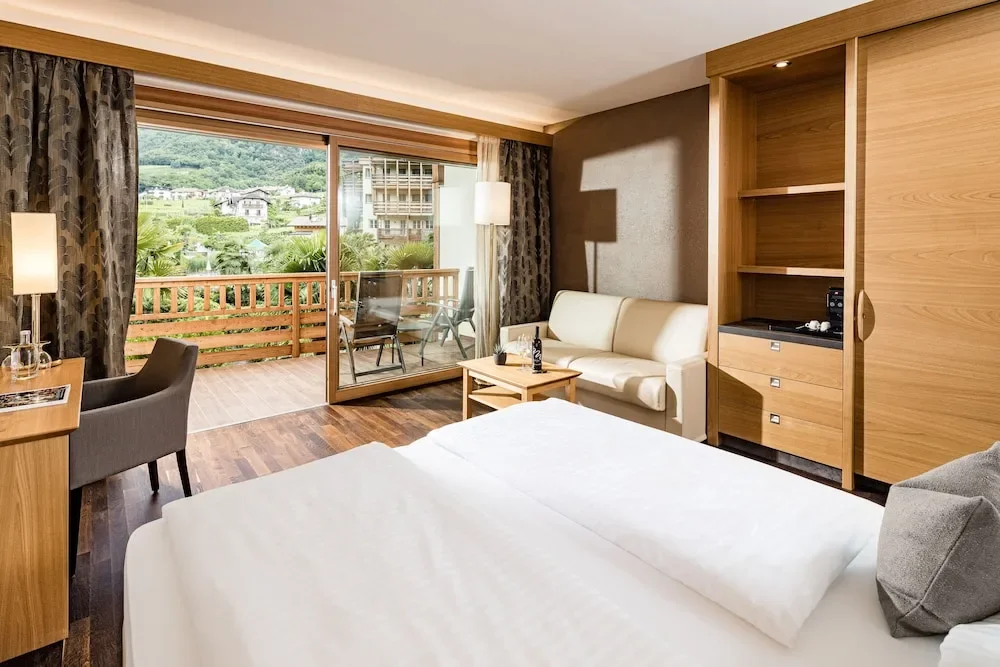
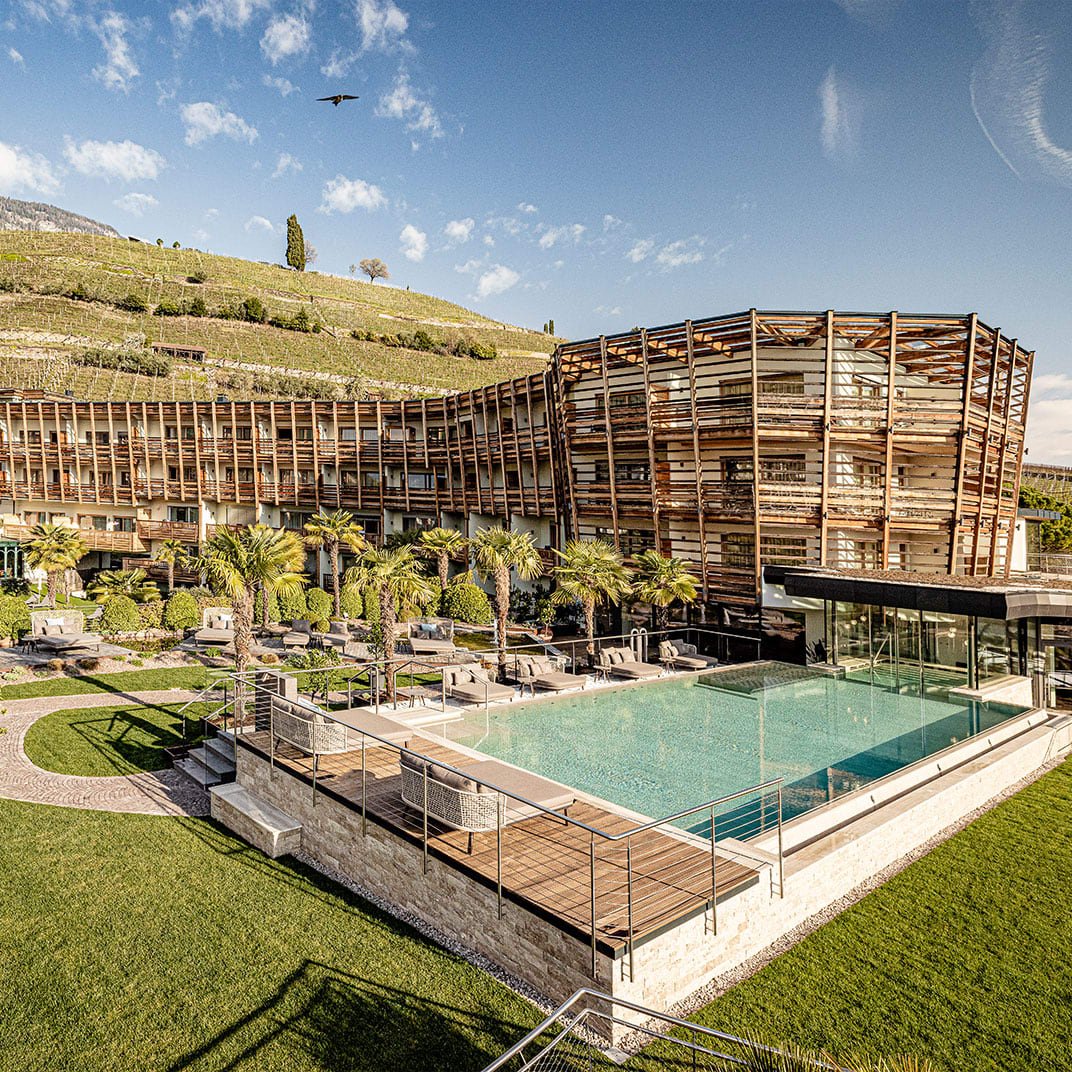
Lake Spa Hotel SEELEITEN
This is a place you exhale into. Set between vineyards and the lake, it blends Alpine charm with Mediterranean ease—lakefront lounging, mountain views, and a private beach. Michelin Key
Spa: Multiple saunas, steam baths, indoor/outdoor pools, and serene wellness rituals using local ingredients
Dining: Italian flavors with Alpine heart—thoughtful, seasonal, and wine-forward
Vibe: Relaxed luxury, not flashy; perfect for slowing down
If you want something quieter or more rustic, there are also family-run inns and mountain hideaways where Wi-Fi is optional and fresh air is not.
How long to stay
Ideal stay: 3–5 nights
Enough time to unwind, taste wine, and explore without rushing. This trip can be combined with many itineraries in Italy, Austria, or Switzerland.
My suggestion: Start in Milan for a couple of nights, then spend 3-5 nights in Alto Adige and the Dolomites, and end in Venice.
Experiences Worth Your Time
Winery visits: 1–3 smaller estates—keep it light and focused
Lago di Caldaro: Swim, paddleboard, or simply linger lakeside with a glass of white
Dolomite hike or e-bike ride: Scenic, accessible, and unforgettable
Bolzano or Merano: Architecture, cafés, markets, thermal baths, and a dose of culture
Spa + slow afternoons: This is non-negotiable
Hidden-Gem Restaurants
Zur Rose – Seasonal Alpine cuisine with serious local credibility
Vögele – A classic locals’ spot for refined Tyrolean dishes
Vinothek Paradeis – Small, wine-focused, and deeply charming
Kränzelhof Restaurant – Elegant dining set in botanical gardens
Mountain huts (rifugi): Casual lunches, hearty plates, and views that steal the show
Getting There
Innsbruck (INN): ~90 minutes, scenic and easy
Verona (VRN): ~2 hours south
Munich (MUC) or Milan (MXP): Excellent options with beautiful train or driving routes
Wines to try at home
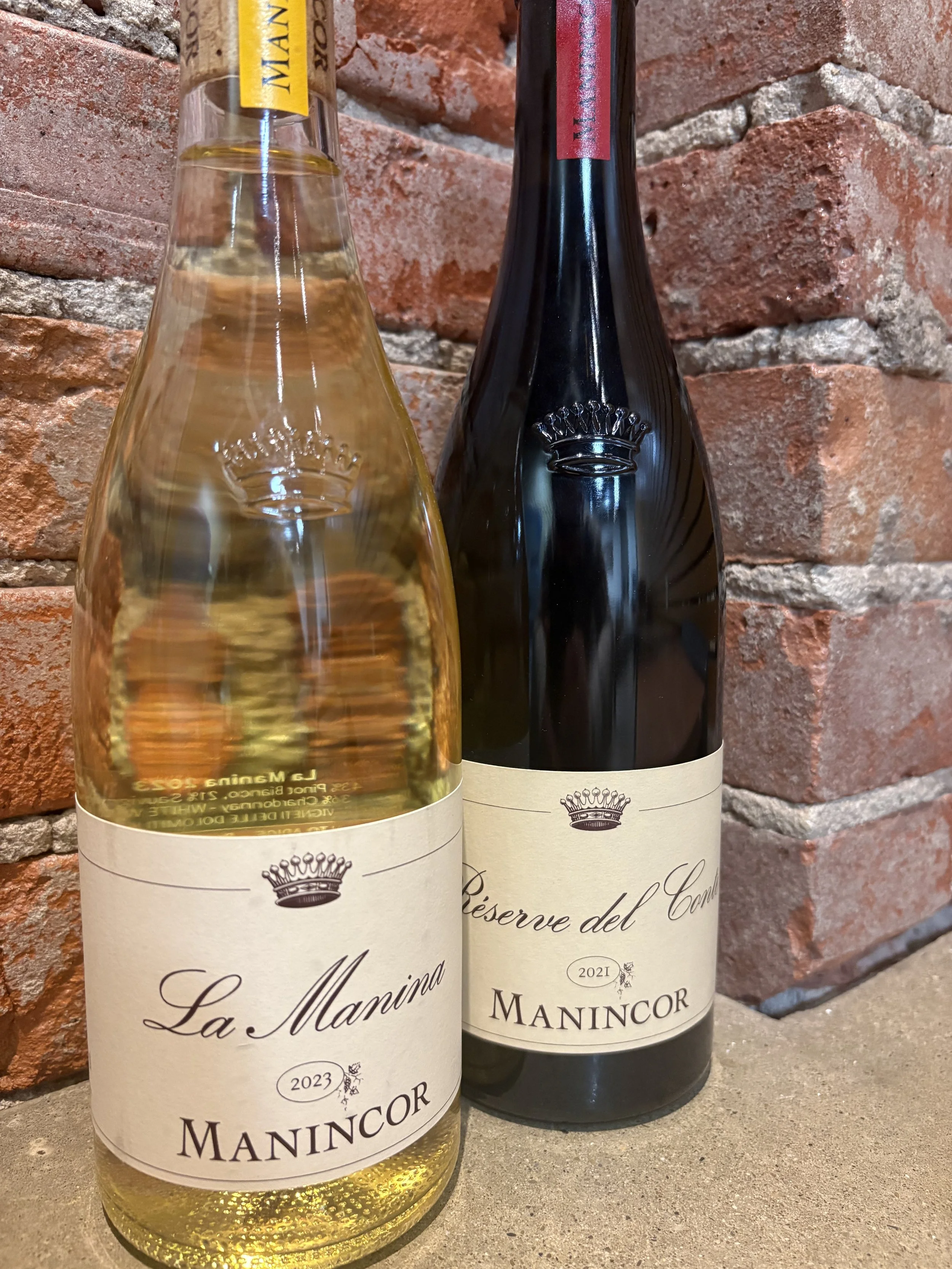
The wines here are defined by purity, freshness, and mountain energy, and few producers capture that balance better than Manincor.
Manincor La Manina 2023 is everything Alto Adige whites do best: bright, mineral-driven, and effortlessly refreshing. A blend of Pinot Blanc, Chardonnay, and Sauvignon Blanc, it delivers green apple, white peach, and a crisp floral lift that feels tailor-made for aperitivo.
Then there’s Manincor Reserve del Conte 2021—a red that could only come from this landscape. Lagrein, Merlot, and Cabernet come together with dark fruit, savory spice, and a cool Alpine edge that keeps it elegant and food-friendly.
Both wines are beautiful expressions of place—and at approachable price points, they’re perfect for entertaining well at home.
Once you arrive, having a car gives you the freedom to explore vineyards, lakes, and mountain roads at your own pace.
I love pairing wine with place—and helping people discover regions like this in a way that feels natural, not overplanned. Reach out if you are interested in chatting about the region - traci@coastandvinetravel.com.
